An 8 week moving checklist works because the expensive decisions (which mover, which date, which address changes) sit at the front, and the physical work of packing sits at the back where it belongs. Book and declutter in weeks eight through six, handle paperwork and records in weeks five through three, pack and confirm in the last two, and keep a single folder for moving day. Below is the week-by-week table, then the detail behind each line.
The timing assumes a household move within the United States. If your move is interstate and uses a professional mover, several of the steps follow federal consumer rules, and we link those where they apply.
The 8 week moving checklist, week by week
| When | Do this | Why now |
|---|---|---|
| 8 weeks out | Set the move date; request written estimates from at least three movers or brokers; confirm registration and USDOT numbers; start a moving folder | Good movers book up, and estimates take time to compare properly |
| 7 weeks out | Declutter room by room; schedule donation pickups or a sale; order or collect boxes and labels | Everything you remove now is something you do not pay to move |
| 6 weeks out | Book the mover or truck; book elevator or loading-dock time if a building requires it; request school records and new-school enrollment forms | Building rules and school transfers both have lead times |
| 5 weeks out | Request medical, dental and veterinary records or transfers; refill prescriptions for the move window; notify landlord in writing if renting | Providers can take up to 30 days to supply copies |
| 4 weeks out | File the USPS change of address; start the change-of-address list for banks, insurers, employer, subscriptions and government accounts | USPS asks you to allow 7 to 10 business days after approval for forwarding to start |
| 3 weeks out | Schedule utility stop and start dates; transfer or cancel internet; arrange insurance for the new address | Installers need a window, and gaps in coverage are avoidable |
| 2 weeks out | Pack non-essentials by room with numbered boxes and an inventory; confirm the mover in writing; plan pet and child care for moving day | Numbering now makes the first week after the move faster |
| 1 week out | Pack the open-first box; defrost the freezer; take photos of electronics and furniture condition; assemble the moving-day folder | Photos and the folder are your record if anything goes wrong |
| Moving day | Walk the inventory with the movers; keep the bill of lading; do a final walkthrough of the empty home; read meters | You are the only person present at both ends |
| First week after | Check the inventory before signing off; locate shutoffs and label the breaker panel; update the home binder; confirm forwarding is working | Shutoffs are easiest to find before you need them |
Weeks 8 to 6: quotes, booking and the first purge
Start with the mover, not the boxes. The FMCSA Protect Your Move checklist tells consumers to obtain estimates from at least three movers or brokers and to compare the cost and every other service offered, and to check that an interstate mover or broker is registered with FMCSA and has a U.S. DOT number. Ask each company for the booklet Your Rights and Responsibilities When You Move and ask what the mover is responsible for if your belongings are damaged; the checklist lists both as pre-move questions. FMCSA Protect Your Move also has a registered mover database you can search before the first call.
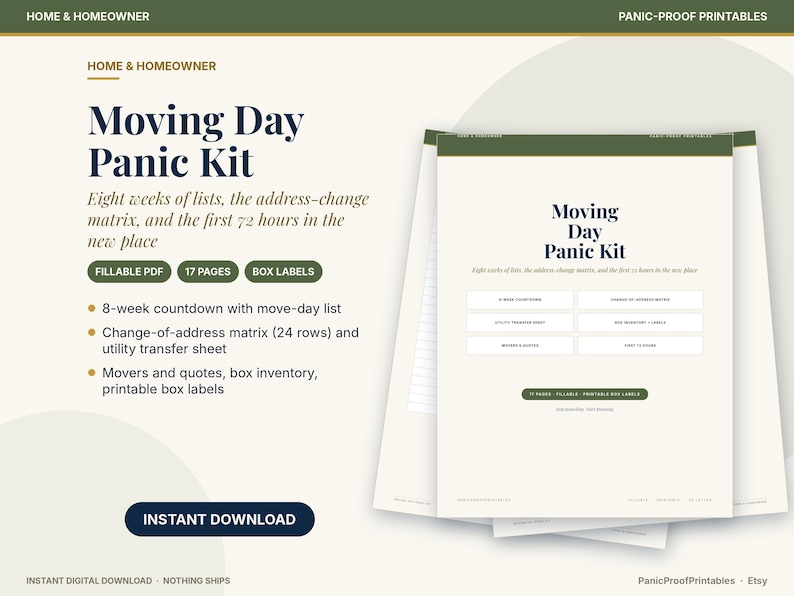
Get every estimate in writing and note whether it is binding or non-binding; the FMCSA checklist says you will pay the driver according to the terms of that written estimate before your goods are unloaded. Keep each quote, the company's registration details and the names of everyone you spoke with in one place. The movers and quotes page of the Moving Day Binder is laid out for a three-quote comparison for this reason.
Decluttering is the one task that pays for itself. Go room by room, and apply a single test: would you pay to move this and then find a place for it. Schedule donation pickups or a sale for week seven, because unscheduled piles tend to end up in the truck.
Weeks 5 to 3: addresses, records and utilities
Change of address
Use the official USPS change-of-address form, not a search result. The USPS change-of-address FAQ warns that third-party websites charge $40 or more to submit a change of address and that USPS cannot help with or refund activity on those sites. The official online form carries a $1.25 identity verification fee, can be filed up to 90 days before the effective date, and the USPS mail forwarding page asks you to allow 7 to 10 business days after approval for forwarding to take effect.
Forwarding is a bridge, not a fix. Standard forwarding of First-Class Mail lasts 12 months and periodicals only 60 days, so every sender still needs the new address directly. Work through the list in a fixed order: banks and cards, insurers, employer and payroll, government accounts, subscriptions, then everyone else. The binder's change-of-address matrix has a row per sender and a column for the date each one confirmed.
School and medical records
Under FERPA, parents have a right to access their children's education records, per the U.S. Department of Education FERPA FAQ, so request a copy of the file and ask the new district what it needs for enrollment. For medical records, the HHS right-of-access guidance explains that you have the right to see and get copies of your health information, that a provider normally has up to 30 days to supply them, and that a reasonable fee may be charged. Five weeks out gives that window room to run.
Utilities
Schedule the stop date at the old address for the day after you leave and the start date at the new one for the day before you arrive, so neither end is dark. List every account on one sheet: electric, gas, water, sewer, trash, internet, and any propane or oil delivery. Record the account number, the confirmation number and the final meter reading you take yourself on moving day.
Weeks 2 to 1: boxes, labels and the open-first box
A labeling system has three parts: a room name, a box number and a one-line contents note. Write the room and number on two sides and the top so the label is visible however the box is stacked, and keep a running inventory that pairs each number with its contents. The point is not neatness; it is that when box 14 is missing, you know what was in it. The Moving Day Binder includes a two-page box inventory and printable labels, six to a sheet.
Pack an open-first box last and carry it with you rather than loading it on the truck. A reasonable list: a box cutter, phone chargers, toilet paper, soap and a towel per person, basic tools, a shower curtain, bedding for the first night, paper plates, pet food, any daily medication, and the kettle or coffee maker. Label it in a color nothing else uses.
In the last week, photograph the condition of furniture and electronics, defrost and dry the freezer, and confirm the mover's arrival window in writing. If anyone in the household takes medication, check that refills cover the move plus two weeks.
Moving day: the folder and the walkthrough
The moving-day folder is the only paper you need within reach. It holds the signed estimate, the mover's contact numbers and registration details, the box inventory, the utility sheet with confirmation numbers, keys and codes for both addresses, closing or lease documents, and a copy of your identification. The FMCSA checklist advises reading the estimate, the bill of lading and the inventory carefully before signing, accompanying the movers as they inventory your goods, and keeping the bill of lading until your goods are delivered, the charges are paid and any claims are settled.
Before the truck leaves, walk every room, closet and cabinet in the empty home, then read and photograph the meters. At the new address, direct the unloading, check items against your numbered inventory before you sign, and note any damaged or missing boxes on the paperwork at that moment, not later.
The first week after: what to update in the new home's binder
The first week in a new home is when you have the most reason to learn where things are and the least knowledge of them. Ready.gov recommends that every household know how to shut off its utilities. Find the main water shutoff valve and tag it for easy identification, make sure it closes completely, and replace it if it is rusted open. For gas, call the gas company to learn the shutoff procedure for your meter type, practice without actually turning it off, and remember that only a qualified professional should ever turn the gas back on. For electricity, locate the panel, and shut off individual circuits before the main.
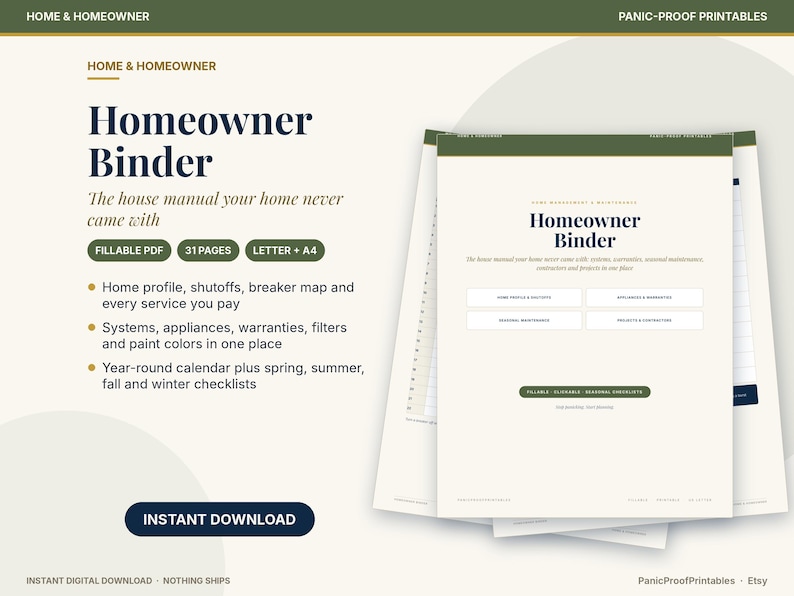
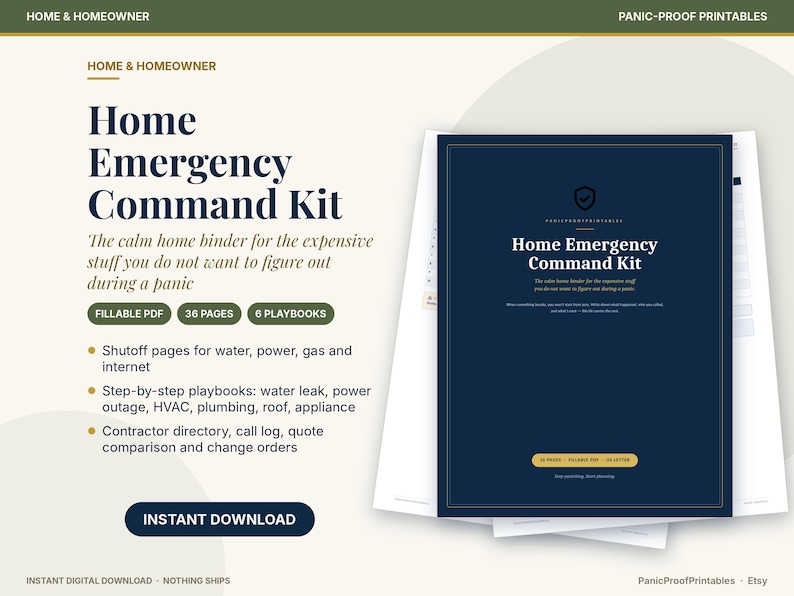
Then map the breaker panel. Flip one breaker at a time and write what went dark; most panels have a few mislabeled or blank slots. Record the water heater, furnace and HVAC model numbers and the filter sizes while the dust covers are already off. The Homeowner Binder has a 44-breaker panel map, a shutoff page and a new-home first 30 days checklist for exactly this week, and the Home Emergency Command Kit adds photo-reference shutoff pages and playbooks for a leak or an outage, which are more useful before the first one than after.
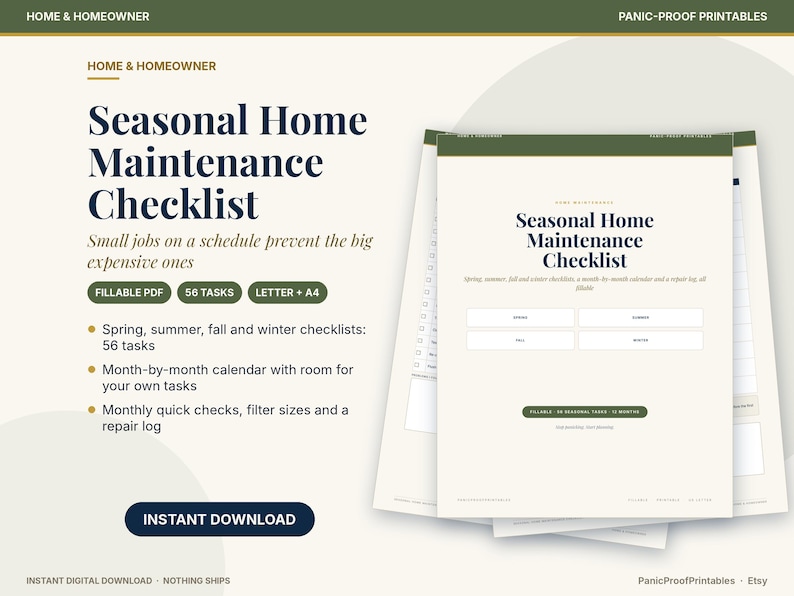
Finally, confirm that forwarded mail is arriving, then start the recurring-maintenance clock. Our free When Did I Last? one-page sheet tracks twelve recurring home tasks and their intervals, and a move is the cleanest possible day one. The rest of our home and homeowner planners pick up from there.
Frequently asked questions
- When should I file my USPS change of address?
- About four weeks before the move. USPS accepts the online form up to 90 days before the effective date, charges a $1.25 identity verification fee, and asks you to allow 7 to 10 business days after approval for forwarding to begin. Use moversguide.usps.com directly; third-party sites charge far more.
- How many moving quotes should I get?
- At least three written estimates, per FMCSA's Protect Your Move checklist. Compare cost and the services included, confirm each interstate mover's FMCSA registration and USDOT number, and ask whether the estimate is binding or non-binding before you book.
- What goes in an open-first box?
- What you need the first night and the next morning: box cutter, chargers, toilet paper, soap and towels, basic tools, a shower curtain, bedding, paper plates, pet food, daily medication and the coffee maker. Carry it with you rather than loading it on the truck.
- What should I do in the first week after moving in?
- Find and tag the main water shutoff, call the gas company about the shutoff procedure for your meter, map the breaker panel one circuit at a time, record appliance models and filter sizes, and check the box inventory before signing off with the mover. Put all of it in a home binder you will keep.
Sources
- FMCSA, Protect Your Move: Moving Checklist
- FMCSA, Protect Your Move
- USPS, Change of Address: The Basics
- USPS, Standard Forward Mail and Change of Address
- USPS, Official Change of Address (Movers Guide)
- HHS, Your Right to Access Your Health Information
- U.S. Department of Education, What is FERPA?
- Ready.gov, Safety Skills: Know How to Shut Off Utilities
This article is organizing guidance, not legal, medical, tax or financial advice. For advice about your situation, talk to a licensed professional.